A practical guide for commercial property owners, facility managers, and business operators.
From restaurants and retail centers to schools, warehouses, and office buildings, commercial packaged rooftop HVAC units play an essential role in maintaining comfortable indoor environments. These systems provide reliable heating, cooling, and ventilation while maximizing valuable indoor space.
Commonly known as rooftop units (RTUs), these self-contained HVAC systems are designed to handle the demanding climate control requirements of commercial properties.
Whether you’re considering a new installation, upgrading existing equipment, or improving energy efficiency, understanding how commercial rooftop HVAC systems operate can help you make informed decisions and manage long-term operating costs.
This guide explores how packaged rooftop units work, their different types, installation considerations, maintenance requirements, common warning signs, and modern technologies that improve HVAC performance.
What Is a Commercial Packaged Rooftop HVAC Unit?
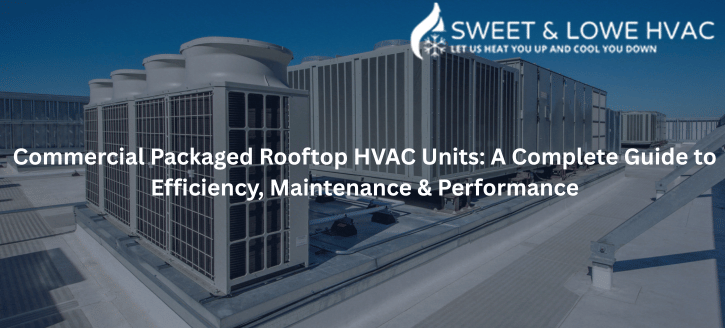
A commercial packaged rooftop HVAC unit is a self-contained heating and cooling system typically installed on the roof of a commercial building. Unlike traditional split systems, which distribute major components between indoor and outdoor locations, an RTU houses most of its essential equipment within a single cabinet.
Depending on the model and configuration, its components may include:
- Compressor and condenser coil
- Evaporator coil
- Supply and return air blowers
- Air filtration system
- Heating equipment, such as a gas furnace or electric heating elements
- Refrigerant lines and controls
- Outdoor air dampers and economizer components
The system conditions indoor air and distributes it throughout the building using a connected ductwork network.
One of the biggest advantages of rooftop HVAC equipment is that it keeps major mechanical components outside the occupied space. This makes it particularly useful for retail stores, restaurants, offices, warehouses, and other commercial facilities where indoor space is valuable.
How Do Commercial Rooftop HVAC Units Work?
Packaged rooftop HVAC systems combine several processes to deliver consistent indoor comfort.
During cooling operation, return air from the building enters the unit and passes through filters to remove airborne particles. Depending on the ventilation configuration, it may mix with a controlled amount of fresh outdoor air.
The air then moves across the evaporator coil, where refrigerant absorbs heat and helps remove moisture. The blower distributes the conditioned air throughout the building through the supply ductwork.
During heating operation, the system uses its installed heating components to increase air temperature before distributing it indoors.
Modern rooftop units may also include economizers, which introduce outdoor air for cooling when outdoor conditions are suitable. This can reduce compressor operation and improve overall energy efficiency.
By combining heating, cooling, filtration, and ventilation in one system, commercial RTUs offer a practical solution for managing indoor environmental conditions.
Why Are Packaged Rooftop Units Popular in Commercial Buildings?
Commercial property owners and facility managers often choose rooftop HVAC systems because they offer several operational and installation advantages.
- Space-Saving Design
Installing HVAC equipment on the roof eliminates the need for large indoor mechanical rooms. Businesses can use their interior space for customers, employees, storage, and daily operations.
- Simplified Installation
Since most major components are factory-assembled, packaged rooftop units can simplify installation and reduce the number of field connections required.
- Convenient Maintenance Access
Technicians can access most system components from the rooftop, helping minimize disruptions to business activities.
- Flexible System Configuration
Large commercial buildings can use multiple rooftop units to serve different areas. This allows property managers to maintain independent temperature control across various building zones.
- Efficient Commercial Climate Control
Modern RTUs offer high-efficiency compressors, advanced controls, economizers, and variable-speed components that can help reduce energy consumption.
Common Types of Commercial Packaged Rooftop HVAC Units
Choosing the right rooftop HVAC configuration depends on building requirements, local climate, energy availability, and operating costs.
- Gas/Electric Rooftop Units
These systems use electric-powered refrigeration for cooling and natural gas heating for winter operation.
They are commonly installed in commercial properties where natural gas is readily available and reliable heating performance is important.
- Electric/Electric Rooftop Units
These units use electricity for both heating and cooling. Electric resistance heating provides warmth, while the refrigeration system handles cooling.
They are relatively straightforward to configure and can be suitable for buildings without access to natural gas.
- Heat Pump Rooftop Units
Heat pump RTUs provide both heating and cooling by transferring heat between indoor and outdoor environments.
They can offer excellent energy efficiency, particularly in moderate climates. However, performance depends on outdoor temperatures and the specific heat pump technology.
- Dual-Fuel Rooftop Units
Dual-fuel systems combine electric heat pump technology with a gas furnace.
The system can switch between heating sources based on outdoor temperatures, equipment performance, and configured operating conditions.
- Variable Air Volume (VAV) Systems
VAV configurations regulate the amount of conditioned air delivered to different building zones.
They are particularly useful in larger commercial facilities that require varying heating and cooling demands throughout the day.
- Dedicated Outdoor Air Systems (DOAS)
DOAS equipment focuses on delivering and conditioning outdoor ventilation air.
These systems can operate alongside other HVAC equipment to improve ventilation management, humidity control, and indoor air quality.
How to Choose the Right Rooftop HVAC Unit
Selecting the appropriate RTU is essential for maintaining indoor comfort, controlling energy costs, and ensuring long-term equipment reliability.
Several factors should be considered before purchasing or installing a commercial rooftop HVAC system.
- Building size: Evaluate the total conditioned floor area and the layout of the property.
- Occupancy levels: Consider the number of employees, customers, and visitors using the building.
- Building insulation: Assess insulation quality, windows, doors, and potential air leakage.
- Equipment heat loads: Commercial kitchens, server rooms, lighting, and machinery can significantly increase cooling requirements.
- Ventilation requirements: Account for fresh outdoor air requirements and applicable building standards.
- Local climate: Consider seasonal temperature changes, humidity, and extreme weather conditions.
- Energy efficiency: Compare available efficiency ratings, operating costs, and equipment features.
Professional HVAC load calculations should determine the appropriate system capacity.
Avoid choosing equipment based solely on square footage or general sizing estimates. Oversized systems can experience short cycling, poor humidity control, and unnecessary energy consumption, while undersized systems may struggle to maintain comfortable temperatures.
Commercial Rooftop HVAC Installation Considerations
Installing a rooftop unit involves more than simply placing equipment on the roof.
Before installation, contractors should evaluate the building structure, roof condition, equipment access, and existing ductwork.
Important considerations include:
- Structural capacity: Confirm that the roof can safely support the equipment and associated installation loads.
- Roof curbs: Ensure the equipment curb is compatible with the unit and properly sealed.
- Ductwork connections: Inspect existing ducts for leaks, insulation problems, and airflow restrictions.
- Electrical requirements: Verify that electrical connections and power capacity meet manufacturer specifications.
- Drainage: Ensure condensate drainage is properly designed to prevent water accumulation.
- Service accessibility: Maintain sufficient clearance for inspections, repairs, and equipment replacement.
- Weather protection: Consider exposure to wind, rain, corrosion, and other environmental conditions.
Working with an experienced commercial HVAC contractor helps ensure the installation meets equipment specifications and applicable building requirements.
Commercial Rooftop HVAC Costs and Expected Lifespan
The cost of a commercial rooftop HVAC unit depends on several factors, including equipment capacity, efficiency, heating configuration, installation complexity, and manufacturer.
Additional expenses may include crane services, roof curb modifications, ductwork improvements, electrical upgrades, and equipment disposal.
Most commercial rooftop units have an expected service life of approximately 15–20 years, although actual lifespan depends on operating conditions, maintenance quality, installation standards, and equipment design.
When comparing replacement options, consider more than the initial purchase price.
Evaluate:
- Equipment efficiency ratings
- Expected annual energy consumption
- Maintenance requirements
- Warranty coverage
- Replacement part availability
- Installation and operating expenses
An energy-efficient system may require a higher initial investment but can deliver long-term savings through reduced energy consumption.
Essential Commercial Rooftop HVAC Maintenance Checklist
Regular preventive maintenance is one of the most effective ways to protect commercial HVAC equipment and maintain consistent performance.
Property owners should schedule professional inspections at least twice a year, typically before the main cooling and heating seasons. Maintenance frequency may need to increase depending on operating conditions and manufacturer recommendations.
Here are some important maintenance tasks:
- Replace air filters: Inspect filters regularly and replace them according to manufacturer recommendations and building conditions.
- Clean evaporator and condenser coils: Remove dirt and debris that can restrict heat transfer and reduce system efficiency.
- Inspect blower assemblies: Check fans, belts, bearings, and motors for wear or unusual operating conditions.
- Clear condensate drains: Inspect drain pans and condensate lines to prevent blockages and water leaks.
- Check electrical connections: Inspect wiring, contactors, capacitors, and electrical components for signs of deterioration.
- Inspect refrigerant circuits: Have qualified technicians investigate refrigerant-related performance issues and potential leaks.
- Test thermostats and controls: Confirm that temperature settings, sensors, and operating sequences function correctly.
- Inspect roof curbs and seals: Check for water intrusion, damaged flashing, and deteriorating weatherproofing.
- Verify ventilation operation: Ensure outdoor air dampers and economizer controls operate as intended.
- Document maintenance activities: Maintain service records to track equipment condition, recurring issues, and repair history.
Consistent maintenance can improve system reliability, support energy efficiency, and help identify developing problems before they become expensive repairs.
Warning Signs Your Commercial Rooftop HVAC Unit Needs Repair
Commercial HVAC systems often show warning signs before experiencing a complete breakdown.
Recognizing these symptoms early can help prevent operational disruptions and expensive emergency repairs.
Watch for the following indicators:
- Uneven temperatures across different areas of the building
- Weak or inconsistent airflow from supply vents
- Grinding, rattling, buzzing, or squealing noises
- Unusual odors coming from the ventilation system
- Water leaks or ceiling stains near ductwork
- Frequent system cycling or unexpected shutdowns
- Unexpected increases in electricity or gas bills
- Reduced cooling or heating performance
- Thermostats that fail to maintain the desired temperature
If these problems occur, arrange a professional inspection rather than allowing the system to continue operating under abnormal conditions.
For businesses in the local area, timely Air Conditioning Repair Amityville NY services can help identify equipment problems, restore system performance, and reduce the risk of unexpected breakdowns.
Smart HVAC Upgrades to Improve Energy Efficiency
Modern commercial rooftop HVAC systems offer several upgrade opportunities that can improve comfort, reduce energy consumption, and simplify building management.
Programmable and Smart Thermostats
Smart thermostats help regulate indoor temperatures based on operating schedules and occupancy patterns.
They can reduce unnecessary heating and cooling when commercial spaces are unoccupied.
Variable-Speed Compressors and Fans
Variable-speed components adjust system output according to actual heating and cooling requirements.
This can improve temperature consistency, reduce energy waste, and minimize unnecessary cycling.
Demand-Controlled Ventilation
Demand-controlled ventilation adjusts outdoor air intake based on occupancy indicators, such as carbon dioxide levels, where appropriate.
This helps balance ventilation requirements with energy consumption.
Economizer Improvements
Properly operating economizers use suitable outdoor conditions to reduce mechanical cooling requirements.
Inspecting and maintaining dampers, sensors, and controls can help restore their intended energy-saving benefits.
Building Automation Systems
Building automation technology allows facility managers to monitor HVAC operation, adjust settings, and identify equipment issues through centralized controls.
These systems can improve operational visibility and support more effective energy management.
How to Choose the Right Commercial HVAC Contractor
Selecting an experienced HVAC professional is essential for protecting your commercial equipment and maintaining reliable indoor comfort.
Commercial rooftop systems have different service requirements from residential HVAC equipment, so experience with commercial installations and rooftop maintenance matters.
Before hiring a contractor, consider the following:
- Verify appropriate licensing and insurance.
- Ask about experience with commercial packaged rooftop units.
- Review customer references and previous projects.
- Confirm emergency service availability and response times.
- Ask whether preventive maintenance agreements are available.
- Request detailed estimates outlining labor, equipment, and material costs.
- Look for technicians who explain problems and repair recommendations clearly.
A dependable HVAC Contractor Amityville NY should provide transparent recommendations, explain available repair options, and help property owners understand the long-term implications of their HVAC decisions.
Working with a knowledgeable local provider can also help address equipment challenges associated with Long Island’s seasonal temperature changes and coastal humidity.
Repair vs. Replacement: When Should You Upgrade Your Rooftop HVAC System?
Deciding whether to repair an existing rooftop unit or replace it with a newer model requires evaluating the equipment’s overall condition and operating performance.
Repair may be the better option when:
- The unit is relatively new.
- Problems are limited to individual components.
- The system maintains acceptable efficiency.
- Replacement parts are readily available.
- Repair costs are reasonable compared with replacement.
Replacement may be worth considering when:
- The unit is approaching the end of its expected service life.
- Major components repeatedly fail.
- Energy consumption has increased significantly.
- Repair expenses are becoming difficult to justify.
- The system no longer meets building comfort or ventilation requirements.
- Newer equipment offers meaningful efficiency or operational improvements.
A professional HVAC assessment can help determine the most cost-effective approach based on equipment condition, repair history, and projected operating expenses.
Final Thoughts
Commercial packaged rooftop HVAC units are an essential part of modern commercial building infrastructure. Their space-saving design, integrated heating and cooling capabilities, and flexible configurations make them a practical solution for businesses across various industries.
However, long-term performance depends on proper equipment selection, professional installation, regular maintenance, and timely repairs.
By understanding how RTUs operate and recognizing early warning signs, commercial property owners can make better decisions, improve energy efficiency, and minimize unexpected equipment downtime.
Whether you need routine maintenance, system upgrades, or professional repairs, partnering with a reliable HVAC Company Amityville NY can help keep your commercial heating and cooling equipment operating efficiently throughout the year.
Investing in your rooftop HVAC system today can contribute to better indoor comfort, more dependable building operations, and improved long-term cost management.
HVAC Contractor Amityville NY






Leave a Reply